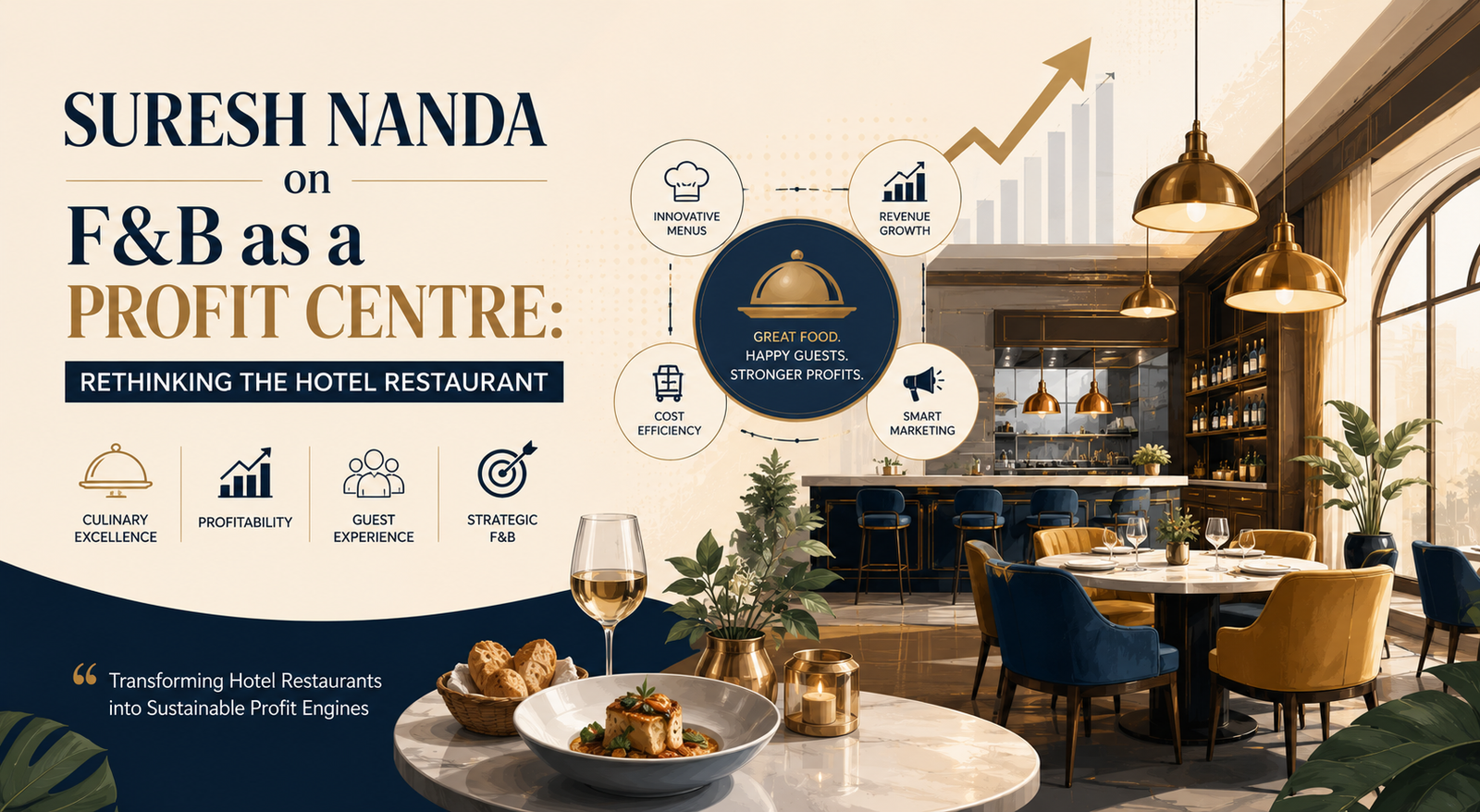
For decades, hotel restaurants were considered primarily as guest amenities instead of independent revenue drivers. The routine tasks include offering room bookings, providing convenience, and improving the overall guest experience. Though this approach served the hospitality industry for years, with evolving times, the hotel sector witnessed a transformation as well. The changing consumer preferences and evolving dining trends have transformed the role of Food & Beverage (F&B) operations. Also, leveling up your hotel’s culinary program could be the reason to unlock stronger margins.
Today, successful hotels recognize that restaurants, bars, cafés, and banquet services are important profit centres in their own right. F&B isn’t just a must-have setup anymore; it has become a powerful profit lever now.
By rethinking F&B, renowned hoteliers like Suresh Nanda are able to attract local diners, host memorable events, build brand loyalty, and create multiple revenue streams through various ventures including The Claridges, Taj Surajkund Resort & Spa, Dhaba, Erawaan, Jade, Sevilla, and Pickwick.
The Shift from Cost Centre to Revenue Generator
Earlier, hotels considered the restaurants inside their property as a necessary operational expense. In most of the cases, staffing, inventory, equipment, and maintenance often resulted in high operating costs, leading management to focus primarily on occupancy rates as the main source of profitability.
However, today’s hospitality landscape presents the other side of the coin. Modern travelers prefer authentic dining experiences, while residents actively explore restaurants within hotels for quality cuisine, ambience, and convenience. As per Suresh Nanda news, brands like the Claridges, New Delhi; Taj Resort & Spa in Surajkund, etc. offer the best culinary experiences to guests, which further deepens emotional connection.
Creating Unique Dining Experiences
Though food quality matters a lot, it is no longer enough to differentiate a restaurant. Modern diners look for memorable experiences that combine exceptional cuisine with ambience, storytelling, personalized service, and visual appeal. Open kitchens, chef interaction, regional tasting menus, farm-to-table concepts, and experiential dining events help create emotional connections with guests.
Hotels that position their F&B outlets as destination dining venues instead of exclusive facilities for in-house guests can significantly increase footfall and profitability.
In this context, over the years, The Claridges has also established a formidable reputation in serving multi-cuisine and beverages. As part of Suresh Nanda’s long-term vision to expand The Claridges portfolio, he collaborated with Indian Hotels Company Limited to take the brand to the next growth level and are now targeting more than 20 properties by 2030 under Claridges Collection.
Now, The Claridges has become a timeless destination not due to its rich cultural heritage but due to its sophisticated experiential elements.
Suresh Nanda suggest that investing in unique dining concepts often benefit from stronger customer loyalty, positive reviews, and increased social media visibility.
Leveraging Events and Celebrations
Hotel restaurants possess a unique advantage over standalone restaurants. They not only ensure hygiene and quality but also provide access to banquet halls, conference facilities, outdoor venues, and luxury accommodations for hosting larger events. By combining dining with celebrations, hotels can generate substantial F&B revenue through:
- Wedding functions
- Birthday celebrations
- Corporate events
- Business lunches
- Cocktail parties
- Product launches
- Family gatherings
- Festive buffets
By hosting such events, businesses don’t just increase food and beverage sales but also drive additional bookings for rooms and event spaces.
Optimizing Menu Engineering
To make a hotel business successful, going beyond a fancy menu is important. Using the right strategy while crafting a menu is important, as it helps hotels understand which dishes deliver the highest profitability while maintaining customer satisfaction. By analysing ingredient costs, preparation time, popularity, and pricing, management can design menus that maximize contribution margins.
Some of the improvements which can be made for maximising profits include:
- Highlighting signature dishes
- Reducing low-performing items
- Promoting high-margin beverages, etc.
Beyond these, Suresh Nanda believes that there is a strong need to create menus that are replicable. Offering training to the chefs brings a consistent quality menu, which in turn makes your F&B program a grand hit.
All these significantly improve overall profitability without compromising guest experience.
Final Words
The future of hotel dining is linked with innovation, flexibility, and guest-centric experiences. Modern consumers value authenticity, sustainability, convenience, and memorable interactions, and renowned hoteliers like Suresh Nanda embrace these to transform the F&B operations of his ventures into thriving businesses.
Even Suresh Nanda son, Sanjeev Nanda, runs successful hotel ventures in Dubai by combining operational excellence with creative dining concepts, strategic marketing, and data-driven decision-making.
In today’s competitive hospitality industry, rethinking the role of Food & Beverage is no longer optional. It is a strategic investment that has the potential to elevate guest satisfaction, build community engagement, and unlock sustainable growth for the entire property.