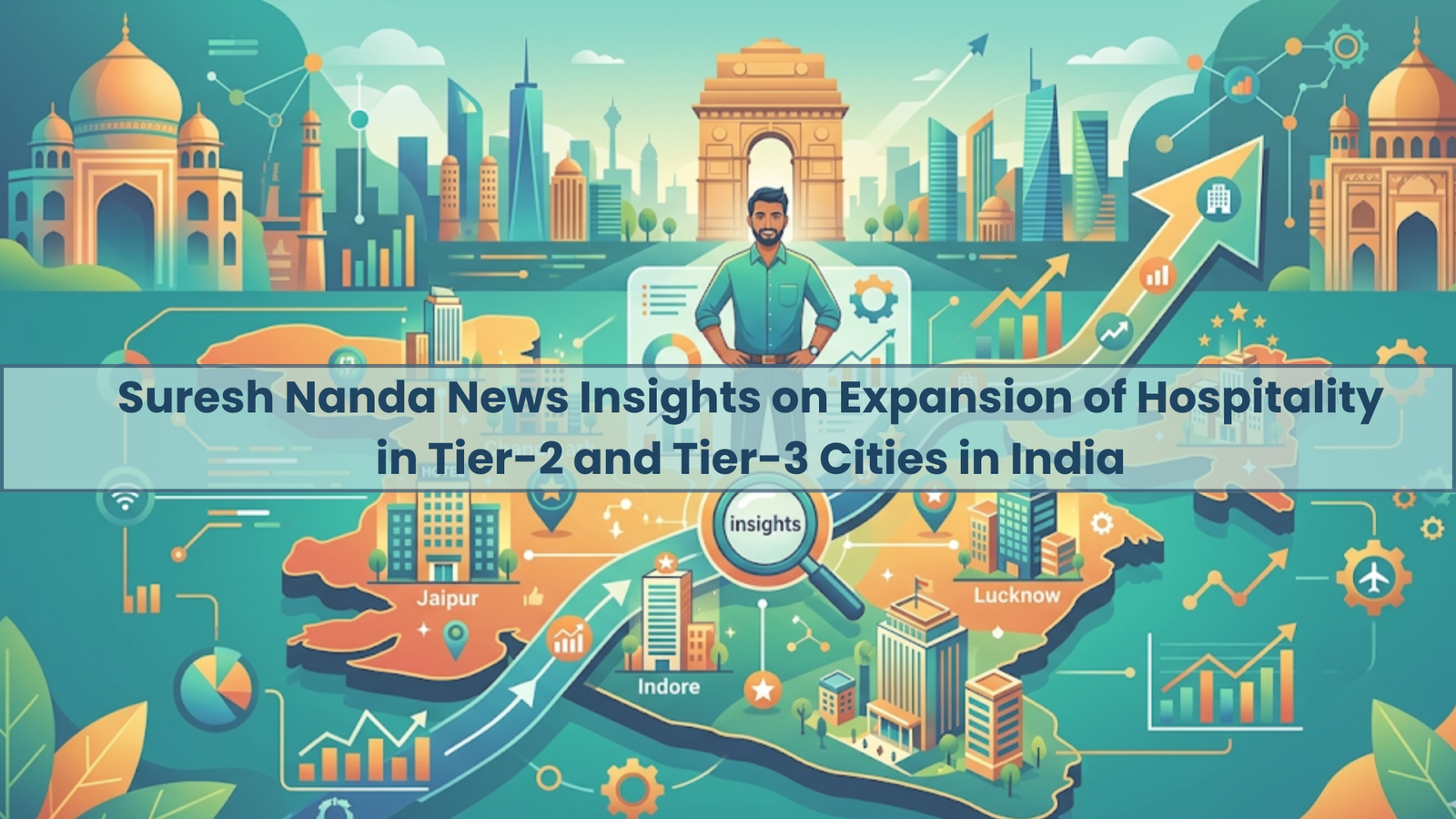
For a long time, the luxury hospitality industry was concentrated in metro cities. But now the sector is expanding its presence in tier-2 and tier- 3 cities as well. This shift is redistributing demand towards premium hotels in these cities.
Suresh Nanda, a reputed global business magnate, through his ventures and long-term expansion strategy, is driving a significant shift in the sector.
His partnership with the Indian Hotels Company Limited (IHCL) and the expansion of the Claridge’s collection with plans for 20+ hotels by 2030, focuses on expanding premium hospitality in metros and then taking it to tier-2 and tier-3 cities.
Inspired by his father’s legacy, Suresh Nanda’s son, Sanjeev Nanda, is expanding the family’s global hospitality footprint in Dubai.
The Demand Shift: Beyond Metro Cities
India’s smaller cities are no longer termed as “emerging”. The disposable incomes are rising. The road connectivity is improving with new highway projects.
Cities like Jaipur are considered as sought-after destinations for weddings, and royal tourism in Lucknow is witnessing increased economic activity. Nearly 70% of Gen Z and millennials are travelling to these places to seek immersive cultural heritage experiences.
According to insights often echoed in Suresh Nanda’s industry commentary, this demand is not temporary; it reflects a deeper decentralisation of economic growth in the country.
How is domestic tourism leading this expansion?
Over the past few years, tourists have increasingly been exploring domestic destinations. They travel to discover hidden gems and culturally rich locations in the country.
Unlike in earlier decades, when luxury was associated only with international destinations and lavish stays, today’s travellers are choosing boutique hotels, heritage properties, and experiential stays. Weekend travel, short getaways, and work-from-anywhere lifestyles have further accelerated this trend.
According to Suresh Nanda News, this is not a temporary surge. Instead, it is the decentralisation of economic growth. As smaller cities continue to develop, the demand for high-quality hospitality infrastructure will only grow stronger in the future.
Digital Drivers in the Expansion of Tourism and Luxury Hospitality
With upcoming projects and infrastructure developments, many tier 2 and tier 3 cities like Lucknow, Varanasi, Mussoorie, and Jaipur will see an increase in experiential tourism. As per industry updates of 2025, 70% of hotel bookings are made via mobile phones.
The trends of experiential travel and religious tourism are increasing. These are gaining traction in the demand for luxury hotels. Hence, most of the travellers are seeking experience-led stays.
Diverse offerings by Luxury Hospitality
Suresh Nanda, being a global business visionary, foresees rising demand for luxury hospitality beyond demographic boundaries. As modern travellers are explorers, they don’t just want a place to stay. They seek cultural immersion.
Moreover, the research indicates that 60% of tourists prefer travelling to cities beyond the metros. So the revenue and profits can be maximised with diverse offerings and innovative operational methods here. With his upcoming ventures, Suresh Nanda aims to expand his hotel network to these cities.
What are The Upcoming Trends in Hospitality in Tier 2/3 cities?
Trend 1: Heritage-Driven Luxury
Most travellers in tier 2 or tier 3 cities are explorers. They seek real-life experiences and first-hand experiences of local cultures. So, revitalising historical assets into boutique hotels to meet this demand for cultural connections with the guests. Claridges Nabha Palace (Mussoorie) converts a former royal summer retreat into a high-end destination.
Trend 2: Nature-Centric Wellness Retreats
As mentioned in Suresh Nanda son news, establishing drive-to luxury escapes that emphasise eco-tourism and mental well-being can drive demand for eco-tourism and wellness-focused travel
Trend 3: Micro-MICE & Events
Developing properties specifically designed for regional weddings and corporate off-sites. Taj Hotel (Surajkund) owned by Suresh Nanda utilises its proximity to secondary business districts to dominate the regional event and conference market.
On a Concluding Note,
The expansion of luxury hospitality into tier-2 and tier-3 cities is no longer a speculative trend. It is becoming a structural shift.
At the same time, success in these transitional phases will depend on how thoughtfully hotels adapt to heritage and provide valuable experiences. The focus is shifting from scale to relevance, where understanding regional demand and delivering personalised value becomes critical. Industry perspectives, often reflected in Suresh Nanda news and conversations around the evolving role of his son, point towards a more decentralised, experience-first approach to growth.