The intersection of Artificial Intelligence and defence was an unimaginable reality a decade ago. Today, AI is becoming part of conversations around military preparedness, predictive maintenance and operational efficiency. According to Statista, the global AI market has witnessed rapid growth, reflecting the scale of investment.
Yet, for sectors such as defence and industrial engineering, the more important question is not simply how large the AI market becomes. It is how effectively technology can solve real-world problems.
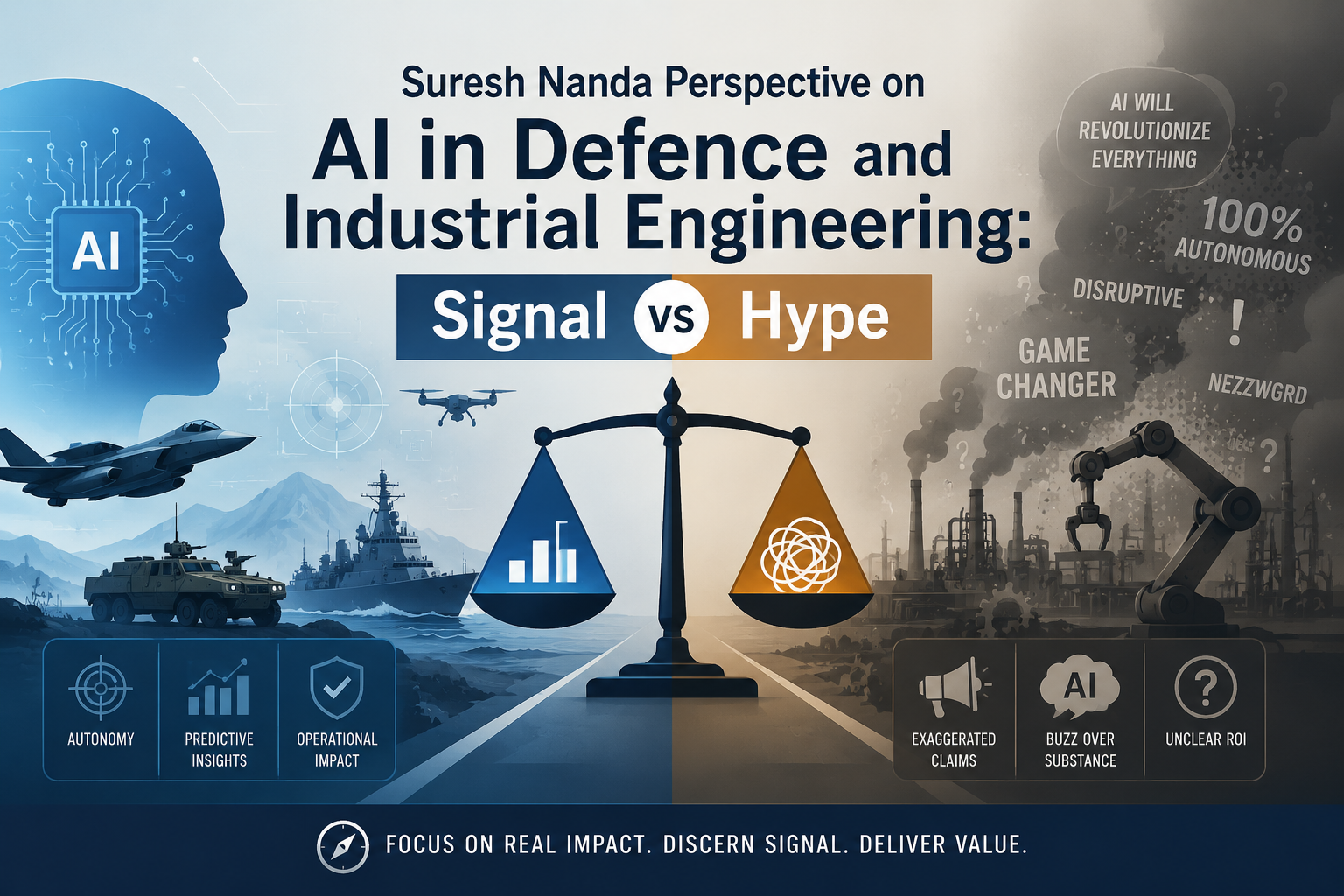
This distinction between signal and hype offers an interesting lens through which to consider the long-standing approach associated with Suresh Nanda and his experience across defence- and engineering-oriented businesses.
From Defence Engineering to Intelligent Systems
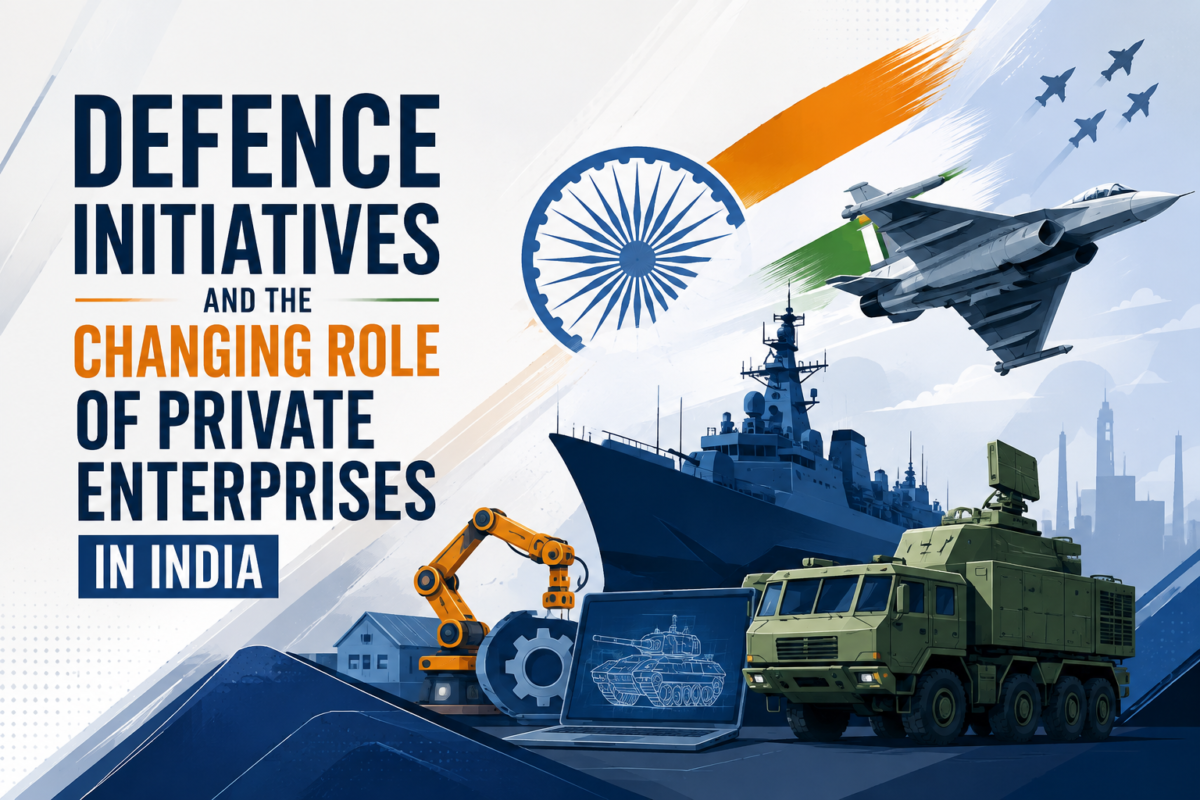
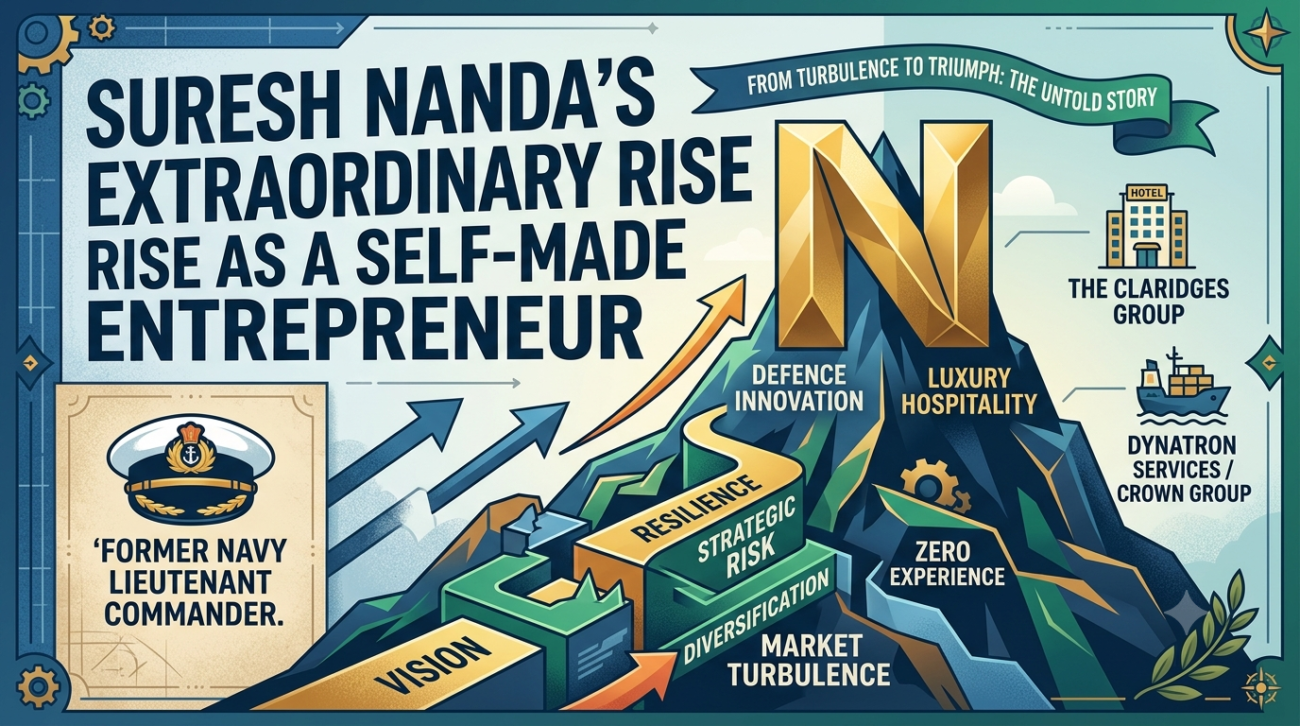
Suresh Nanda’s professional journey has been associated with India’s defence and engineering ecosystem. His experience in the Indian Navy and subsequent involvement in private-sector businesses provided exposure to environments where operational technical expertise and disciplined execution are critical.
AI is now adding another layer of automation, and about 78% of businesses are using AI to boost their operational efficiency and data management. This is not merely an opportunity for visionary leaders like Suresh Nanda and Suresh Nanda son , Sanjeev Nanda, it is particularly significant in industrial engineering, where enormous quantities of operational data can be converted into insights that help organisations make faster and more informed decisions.
Moving Beyond the AI Hype
AI has become a powerful business narrative. Almost every major industry now has an AI strategy, and the rapid growth of generative AI has made the technology even more visible.
However, defence and heavy engineering require a different standard of evaluation.
A chatbot producing an impressive response is the first step towards such huge automation. An AI-enabled system identifying an equipment anomaly before a critical component fails is another. The difference is reliability.
For defence organisations and industrial operators, useful AI should ideally answer practical questions:
- Can it reduce downtime?
- Can it improve maintenance schedules?
- Can it detect patterns that humans may overlook?
- Can it strengthen situational awareness?
- Can it improve resource utilisation without compromising safety?
This is where the distinction between signal and hype becomes important.
Suresh Nanda Redefines The Role of AI in Defence Readiness
Suresh Nanda believes that defence readiness for AI integration depends on information and cyber security.
Modern military operations involve enormous volumes of data generated by sensors, surveillance systems, communications networks and logistics platforms. Processing this information quickly can be challenging for human teams alone.
AI can assist by identifying patterns, prioritising information, and supporting decision-making.
Computer vision, for example, can help analyse imagery. Machine learning can identify anomalies in large datasets. Natural language processing can help organise unstructured information. Autonomous technologies can support certain surveillance and logistics functions.
Defence systems require rigorous testing, secure infrastructure and strong human oversight. An AI system that performs well in a controlled environment may behave differently when exposed to unfamiliar conditions. This makes validation and reliability just as important as innovation.
Engineering professionals Will Remain at the Centre
There is sometimes a perception that AI will eventually replace traditional engineering experts. In complex industrial environments, that assumption is difficult to justify. AI depends on well-designed systems and professionals who understand the processes being analysed.
An algorithm can identify a pattern, but an experienced team can only understand what that pattern means in the real world. This is particularly important for defence and ship repair services, where reliability and safety requirements leave little room for experimentation without adequate safeguards.
In his ventures, including Dynatron services, structured automation planning is therefore likely to involve closer collaboration between engineers and intelligent systems.
From Hype to Long-Term Capability
The most meaningful measure of AI adoption will not be the number of companies announcing AI initiatives. It will be the number of organisations that successfully integrate AI into their core operations and generate measurable outcomes.
For defence and industrial engineering, those outcomes could include improved equipment availability, faster diagnostics, better logistics planning, enhanced surveillance and more efficient resource management.
The next phase of that evolution is likely to be defined by technologies that quietly improve performance rather than simply generate headlines.
Shaping the Next Chapter of Defence Innovation
AI can never substitute for strategy and engineering expertise. It is a tool that can amplify all three when implemented responsibly. For India, the convergence of AI and industrial engineering could become important as the country seeks greater technological self-reliance and stronger domestic capabilities.
For Suresh Nanda, whose professional history has been closely connected with defence and engineering-led businesses, the emergence of AI represents not simply another technological trend but a broader shift in how industrial capabilities can be maintained and managed.
While the headlines for Suresh Nanda Son or Suresh Nanda Son News may focus on the Nanda family’s broader public profile, the more significant business conversation is about how Mr Nanda established industrial thinking intersects with the technologies shaping the generations of defence and engineering.